What Would a Quantum Game Feel Like?

It all began with curiosity.
Recently, I joined a club discussing quantum games, driven purely by a bit of courage I didn't know I had. I was the only humanities major in a room full of engineers.
Here’s how it happened. At work, we held a small meetup themed “Quantum Games.” The question on the table was: What kinds of possibilities could quantum computing bring to game development?
The topic sounded complex just from the name, but the word Game caught my attention. I signed up out of pure curiosity.
I didn’t understand everything, of course. Still, for the first time in a while, I felt my brain stretch and spark in all directions, and that alone made the day worthwhile.

As someone standing between the humanities and the STEM fields, I wanted to put into words a few thoughts that remained after that meeting.
Technical Curiosity
New technologies often change how we experience fun in video games.
When smartphones first appeared, we discovered a completely new way to interact with the screen—by touching it. That single gesture became a new language of play. Think of Fruit Ninja or Angry Birds.
Back in high school, when smartphones first came out, my friends and I played Fruit Ninja endlessly. Swiping the screen felt so strangely satisfying that the action itself became the entertainment.
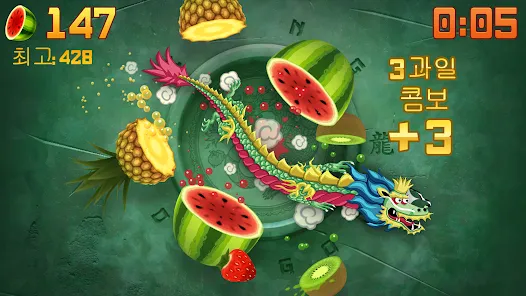
Now, we’re standing at another turning point. Words like "quantum computing" and "quantum sensors" are beginning to drift out of labs and into ordinary conversations.
If not for that shift, I probably wouldn’t have found the idea of that club appealing at all. Even someone like me, who usually catches up on the world while lying in bed after work, scrolling through comics, YouTube, and other little hits of dopamine, had heard enough about quantum computing to get curious.
So I began to wonder: if this “quantum world” were solved into the language of games, what new kind of fun might we experience?
So What Is a Quantum Computer?
I said the meetup was useful, didn’t I? At the very least, I learned a few new words—qubit, superposition, and entanglement.
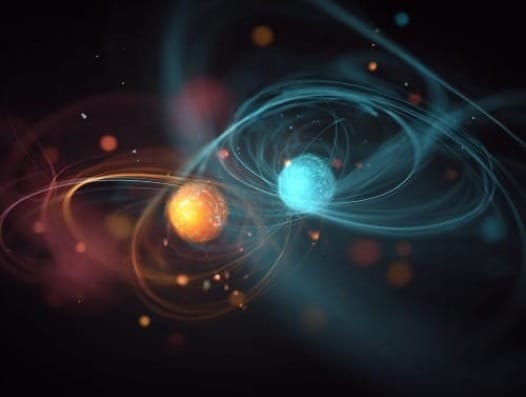
Sure, complicated formulas covered the whiteboard, but that was where my brain hit a wall. I left the math to the engineers and picked up only the ideas, like a baby collecting shiny pebbles. Then I started wondering how those concepts could become design material.
What kind of play could be built out of this? Isn’t that what game designers do?
Here’s what I managed to understand about quantum physics and computing, in my own simple way:
- A quantum computer allows 0 and 1 to exist at the same time.
- The outcome isn't determined until it's observed.
- When two bits of information are entangled, a change in one instantly affects the other.
But isn’t treating an undecided world as part of the calculation already familiar in the world of games? After all, those very calculations are what shape the rules and many other things that make a game come to life.
Jumping on the Quantum Game Wave

I was surprised to learn that quite a few experiments were already underway in this field.
One article I came across, A Chronicle of Quantum Technologies in Game and Software Development, reported that more than 300 quantum game–related projects had been announced so far. Most of these games tried to weave aspects of quantum mechanics into gameplay itself. Game jam events were also being held.
IBM, for example, offers an open-source development kit called Qiskit, which allows anyone to run quantum simulations and experiment with how they might be used in game engines or interactive systems.
It’s still far from mainstream, but it feels like something is taking shape. And I wondered if I could add my own idea to that growing wave. Even for someone like me, who barely understands what a quantum computer really is, experiencing the concept through a familiar game structure might encourage a closer look into the subject.
Two Ideas That Came to Mind
Then two interesting ideas crossed my mind.
Lately, I’ve been thinking about how surveillance-style games have really matured as a genre. In titles like Exit 8, players look for anomalies hidden within a space. Structurally, these games are about spotting irregularities within patterns, which feels oddly similar to the framework of quantum thinking that deals with observation and distinction.
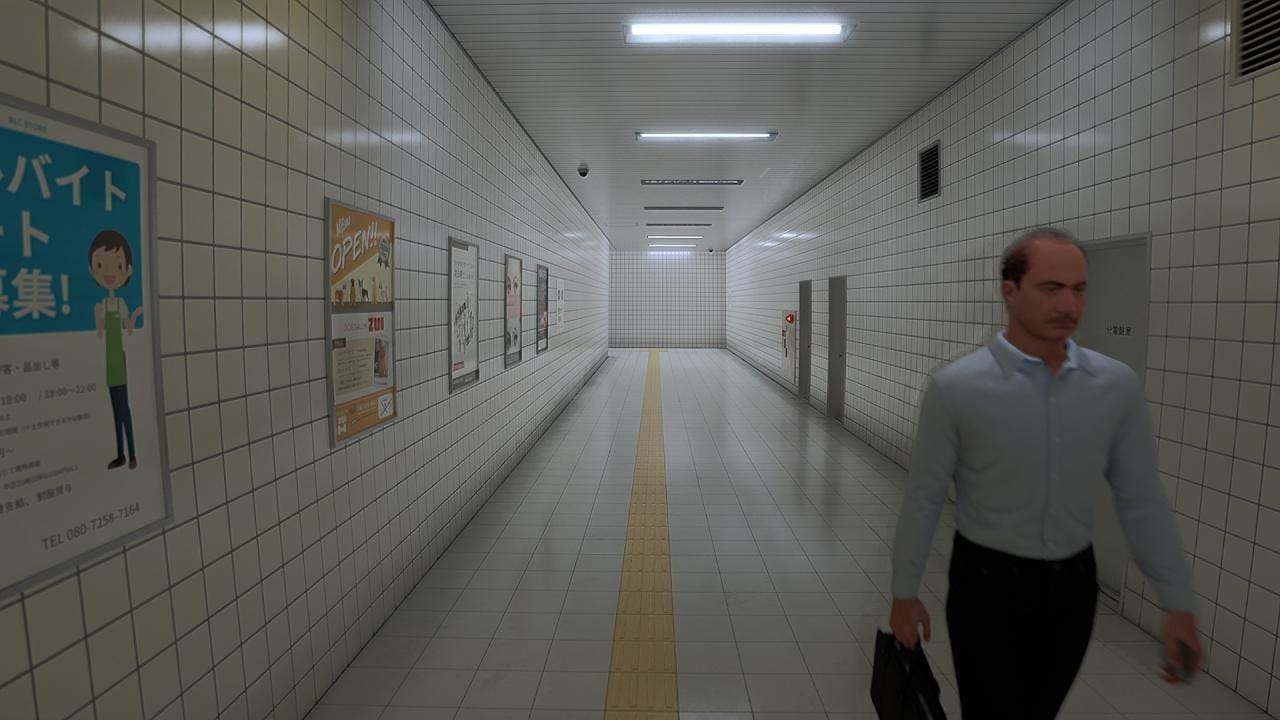
And then, I remembered a world I’d studied for a long time: The Bird That Drinks Tears. I no longer work on it, but somehow that universe resurfaced in my mind.
In that world, there are beings called Tuoksini, creatures defined by “having no rules.” Something about them always reminded me of quantum mechanics. A fantasy novel supported by the logic of quantum theory? Truly precious, really.
In the story, it’s said that the Tuoksini became what they are after losing their god. And the institution that gathers and manages all the legends of that world, and even steps in when trouble arises, is a temple known as 'Great Temple of Hainsha,' run by human monks who worship the 'God Who Is Nowhere.'
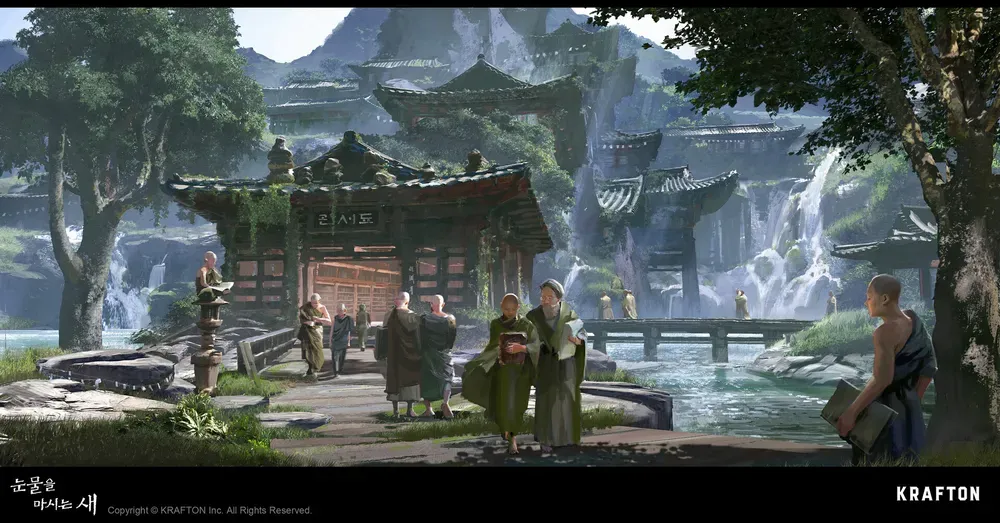
So I decided to mash those two ideas together, PPAP meme-style!
The player would be a monk of Hainsha. One day, the world falls into chaos—Tuoksini have suddenly appeared everywhere. The order is desperate to contain the disaster, and that’s where the story begins.
- The Tuoksini are beings defined by a single rule: they have none. Because of their traces, overlapping states coexist in the world, and no one knows how or when they’ll collapse.
- As a monk, the player must observe these anomalies and, according to the order’s request, collapse the superpositions correctly to restore balance.
- To do this, they carry mysterious tools powered by Qiskit-based gates.
- In the original novel, there were already artifacts crafted by Tokkebi—like an invisible cap called Gamtu that makes the wearer disappear, or a bowl imbued with mystical powers. It would be fun to imagine new tools inspired by those items and expand the world’s lore.
- Each request form lists both essential and preferred conditions: the essential ones are states that must be restored, while the preferred ones are optional goals.
- The player must operate their tools carefully to stabilize the space without generating excessive noise.
- Through observation, the uncertain world collapses into a single, tangible reality.
By the time I finished imagining all this, fatigue had set in. Turning it into an actual game would probably take a lot more refinement.
I still don’t know how observation and collapse would work as gameplay, or how the Qiskit-based tools would actually function. Things like what kinds of outcomes noise might produce or how the method of observation affects those outcomes are still just question marks.
The most important thing is that all these ideas might not turn out to be all that “quantum” once they’re actually built.
And since this IP isn’t something I can use freely, I’m not even sure if making a game like this would be possible at all.
Still, it feels like something worth keeping on the list of things I’d like to create someday.
Playing with Uncertainty
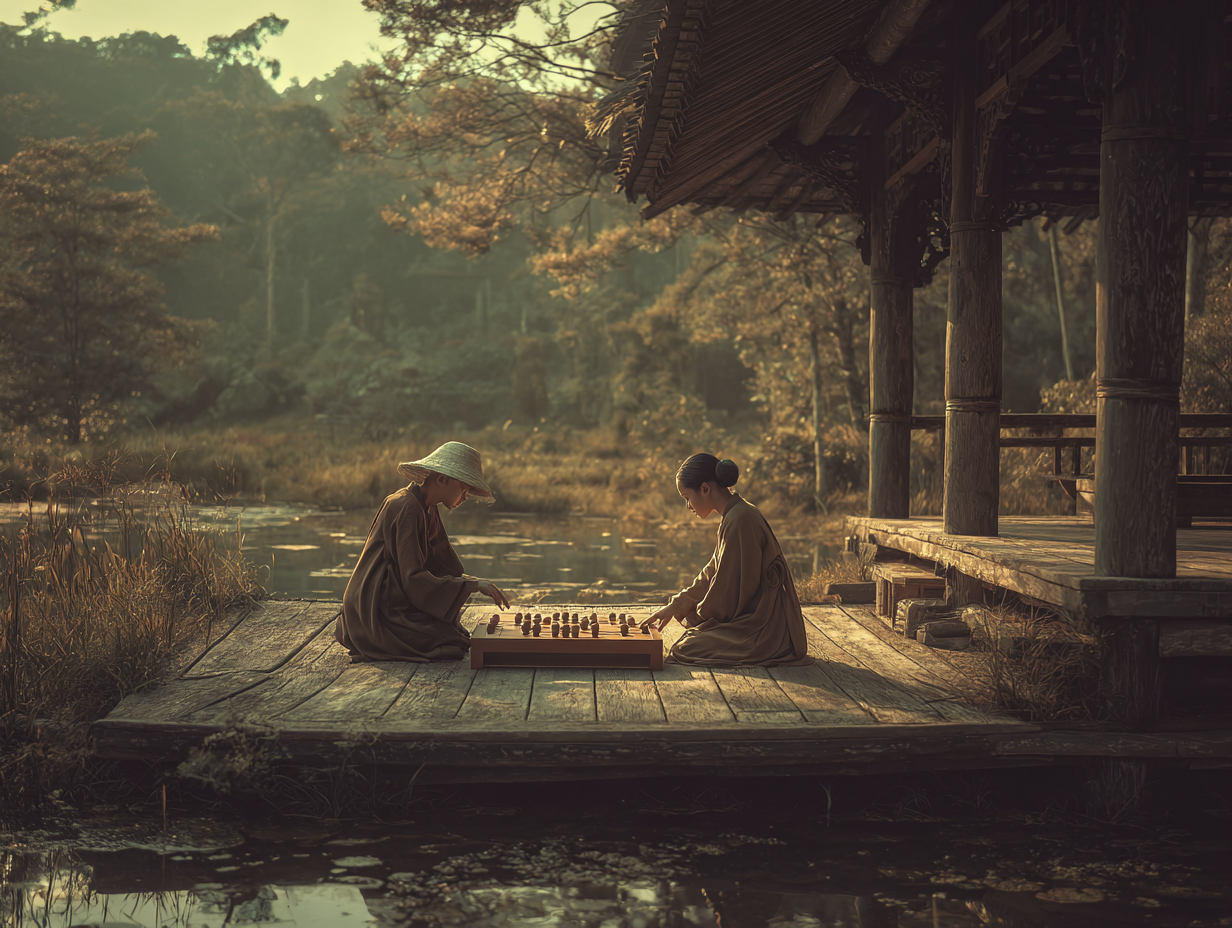
Perhaps I’d been thinking about it too much. A few days ago, I dreamt that I was playing Go with a Buddhist monk.
But the game didn’t follow the rules I knew. The monk placed stones not on the intersections but in the empty spaces between them.
When I reached out to place my white stone, I realized that what I thought was mine had turned black because of another stone the monk had placed. Before I knew it, all my stones were surrounded and captured.
When I woke up, the first thought that came to mind was, “Is this what a quantum game feels like?”
Even though it was a dream and the situation was nonsensical, I later discovered that something called Quantum Go actually exists. I couldn’t help but be impressed by the people who made it. (Their version, unsurprisingly, was far more rational than mine.)
I may have said quite a lot about quantum games here—including that dream—but the truth is, I still don’t really understand what they are. I can still picture the club leader’s worried smile as they said, “You’ll come to the next meeting too, right?"
Maybe that’s why I’ll keep going. After all, it was fun. Who knows? Along the way, I might actually find a way to turn those complex ideas into play. And perhaps one of the thoughts I scribbled down here will grow into something people can truly play someday.
Until then, I hope to keep playing with the quantum world even in small, uncertain ways.


Member discussion